
As the chill of winter still lingers in many parts of the world, the Jewish calendar turns its attention to a subtle, beautiful shift happening deep within the earth. Tu BiShvat, the 15th day of the Hebrew month of Shevat, is known as the New Year for Trees. While it might seem unusual to celebrate a holiday for plants in the middle of winter, Tu BiShvat is a deeply rooted tradition that connects spirituality, ancient law, and modern environmentalism.
Why a “New Year” for Trees?
In the Jewish tradition, there are actually four “New Years” mentioned in the Mishnah (the code of Jewish law). Tu BiShvat was originally established for taxation and agricultural purposes.
In ancient Israel, farmers were required to give a portion of their harvest (tithes) to the Priests and the poor. To calculate the age of a tree and determine which year its fruit belonged to, the Rabbis set the 15th of Shevat as the universal “birthday.”
The significance of the timing:
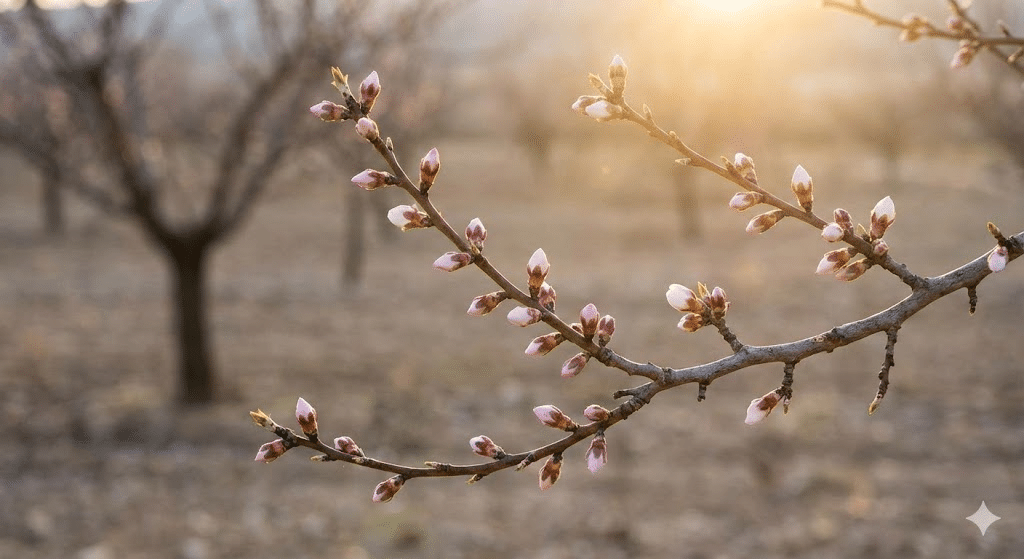
- The Sap Rises: By mid-Shevat, the heaviest winter rains in Israel have usually passed.
- Renewal: Even if the branches look bare, the sap is beginning to rise within the trunk, marking the start of a new fruit-bearing cycle.
Why is it called “Tu”?
The name “Tu BiShvat” is actually a shorthand for the date. In Hebrew, every letter has a numerical value (a system called Gematria).
- Tet (ט) = 9
- Vav (ו) = 6
- 9 + 6 = 15
When you put these two letters together, they spell “Tu.” Therefore, Tu BiShvat literally means “The 15th of Shevat.”
Note: You might wonder why we don’t use the letters for 10 and 5 to make 15. In Hebrew, those letters (Yod and He) form a name of God, so we avoid using them for everyday numbers and use 9 + 6 instead!
Modern Customs: From Ancient Roots to Green Shoots
Over the centuries, Tu BiShvat has evolved from a legal “tax day” into a vibrant celebration of nature. Here are some of the ways people celebrate today:
1. The Tu BiShvat Seder
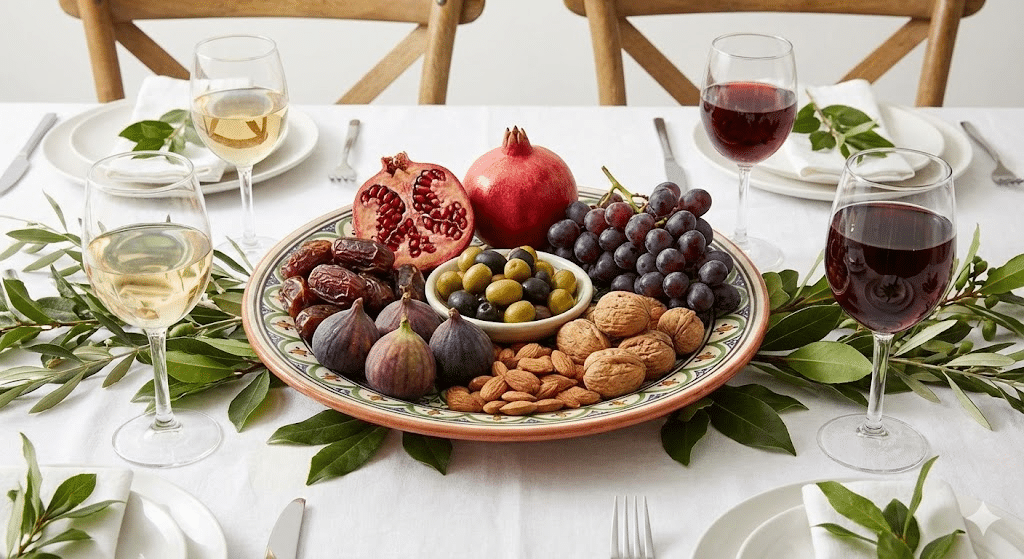
Originating with the Kabbalists (mystics) in the 16th century, this is a festive meal modeled after the Passover Seder. It involves drinking four cups of wine (ranging from white to red to symbolize the seasons) and eating specific categories of fruit:
- Fruits with hard shells (like walnuts or almonds) – symbolizing protection.
- Fruits with pits (like dates or olives) – symbolizing the potential for growth.
- Fruits eaten in their entirety (like grapes or figs) – symbolizing wholeness.
2. Eating the “Seven Species”
It is customary to eat the seven fruits and grains mentioned in the Torah as being native to the Land of Israel: wheat, barley, grapes, figs, pomegranates, olives, and dates (honey).
3. Planting Trees
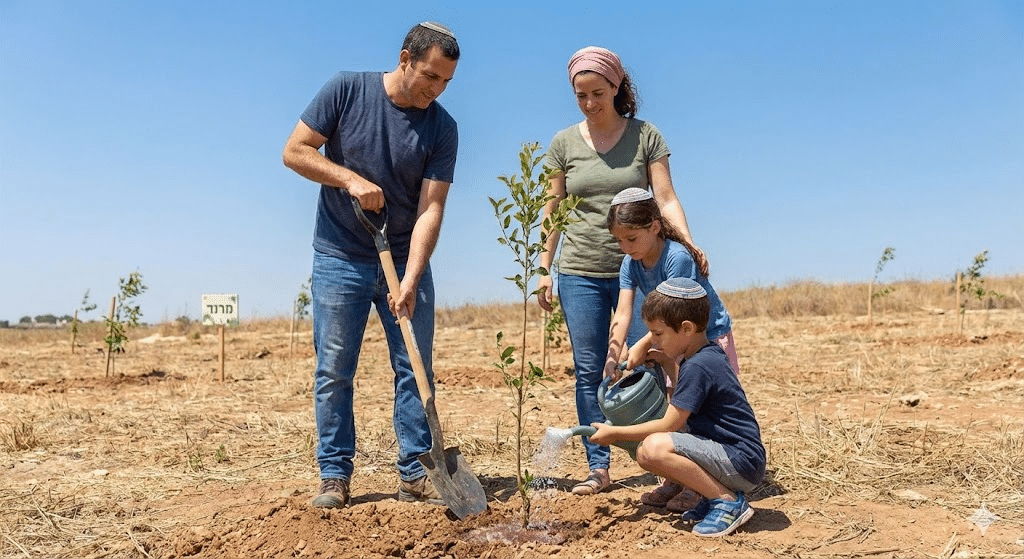
In modern Israel and across the Jewish diaspora, Tu BiShvat has become a day of ecological action. Schools and communities gather to plant saplings, reclaiming the land and contributing to reforestation efforts.
4. Environmental Awareness
Today, many see Tu BiShvat as the “Jewish Earth Day.” It’s a time to reflect on Bal Tashchit (the Jewish prohibition against needless waste) and to focus on sustainability, climate change, and our responsibility to protect the planet.
Tu BiShvat reminds us that even when the world looks dormant and cold on the outside, there is life and growth happening beneath the surface. It’s a holiday of hope, renewal, and a deep appreciation for the natural world that sustains us.
Happy Birthday to the Trees!